Skip to content
plop

Comparison

Best toddler backpacks and rucksacks: what to compare

A good toddler backpack holds about 2 to 10 litres depending on age, closes in a way the child can manage alone, and wipes clean, because a toddler's bag spends its life on the ground.

A toddler's rucksack carries less than a school bag but takes more abuse. It gets dropped, dragged, sat on and left on wet grass, and the child usually wants to open it without help.

Here are the published specifications for the bags parents ask about most, and what the numbers mean in practice.

plop in short

  • 10L waterproof roll-top backpack for children aged 3 to 10.
  • 32 cm high, 25 cm wide, 12 cm deep, so A4 books sit flat.
  • Soft matte TPU fabric, fully waterproof, with welded seams and a reinforced base.
  • Padded adjustable shoulder straps and a chest strap a three-year-old can clip alone.
  • £39 with free UK shipping, 30-day returns and a 2-year guarantee.

Toddler backpacks, side by side

Sort by price, capacity or youngest age, or filter to bags that suit a child under three. Every figure is the maker's own, from their own product page.

Showing 6 of 6 bags

  • Capacity
    2L
    Size
    23 × 18 × 14 cm
    Water protection
    Not stated as waterproof
    Closure
    Zipped top
    Material
    Not stated
    Ages
    1 to 3
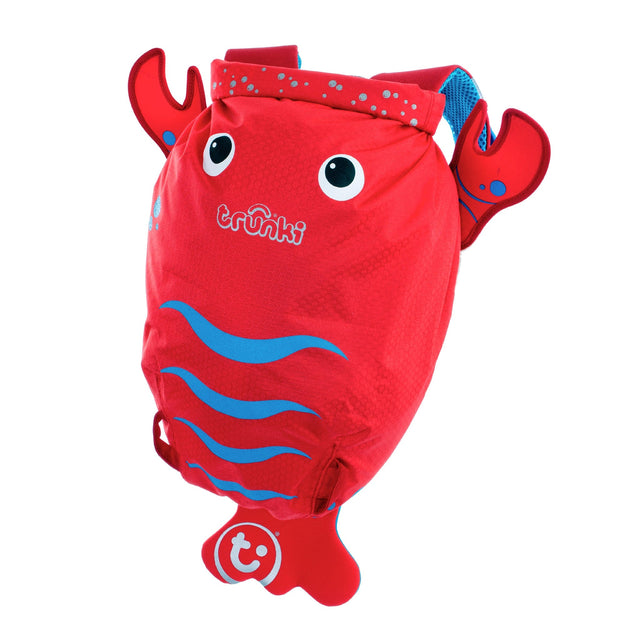
  • Trunki PaddlePak medium backpack, photographed by Trunki

    Trunki PaddlePak (Medium)

    £22.99 (£16.99 on sale)

    Capacity
    7.5L
    Size
    37 × 29 × 17 cm
    Water protection
    Water resistant
    Closure
    Roll top
    Material
    Water-resistant fabric
    Ages
    2+
  • Capacity
    6L
    Size
    32 × 25 × 17 cm
    Water protection
    Not stated as waterproof
    Closure
    Zipped top
    Material
    Not stated
    Ages
    3+
  • Capacity
    10L
    Size
    32 × 25 × 12 cm
    Water protection
    Fully waterproof, welded seams
    Closure
    Roll top
    Material
    Soft matte TPU fabric
    Ages
    3 to 10
  • Capacity
    7L
    Size
    29 × 20 × 13 cm
    Water protection
    Water resistant
    Closure
    Zipped
    Material
    Vinylon F
    Ages
    Small children upwards
  • Capacity
    Not published
    Size
    38 × 27 × 13 cm (body)
    Water protection
    Waterproof lining, body not stated as waterproof
    Closure
    Zipped (YKK)
    Material
    Recycled PET body, waterproof nylon lining
    Ages
    Not stated

Bag by bag

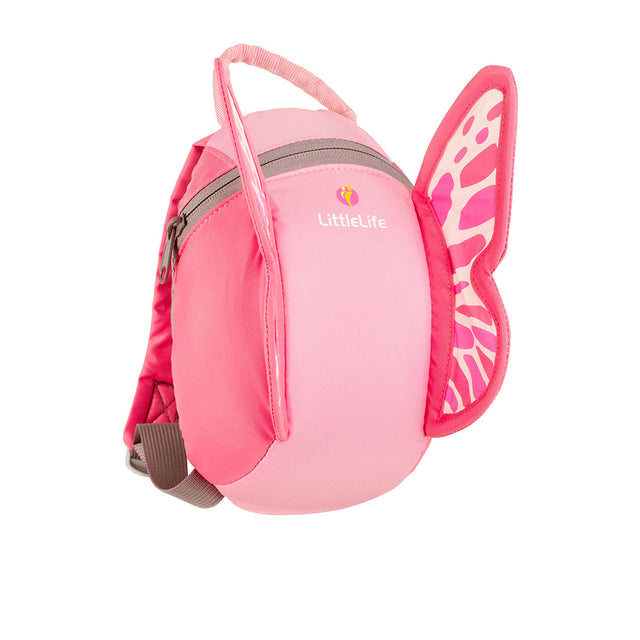
LittleLife Butterfly toddler backpack with rein, photographed by LittleLife

LittleLife Butterfly toddler backpack with rein

2L · Not stated as waterproof · £19.99

A first backpack for a one to three year old, with a rein for busy pavements.

Photo and specifications: LittleLife, checked 15 September 2026.

What is good

  • Detachable parent rein, which plop does not offer.
  • Correctly tiny for a toddler at 2 litres.
  • Very light on small shoulders.
  • Cheap enough to treat as disposable.

What is not

  • 2 litres holds a snack and a spare set of clothes, no more.
  • Zipped, and not described as waterproof.
  • Outgrown at about three.
  • No A4 capability at all.
Trunki PaddlePak medium backpack, photographed by Trunki

Trunki PaddlePak (Medium)

7.5L · Water resistant · £22.99 (£16.99 on sale)

Swimming, the beach and days out, where wet kit has to go home in something.

Photo and specifications: Trunki, checked 15 September 2026.

What is good

  • Roll top rather than a zip.
  • Designed to hold wet swimming kit without leaking out.
  • Character designs children actually ask for.
  • Often discounted below £20.

What is not

  • Water resistant rather than waterproof.
  • Shaped for kit, not for A4 folders.
  • Bulky at 17 cm deep for a small back.
  • It is a pool and beach bag first, a school bag second.
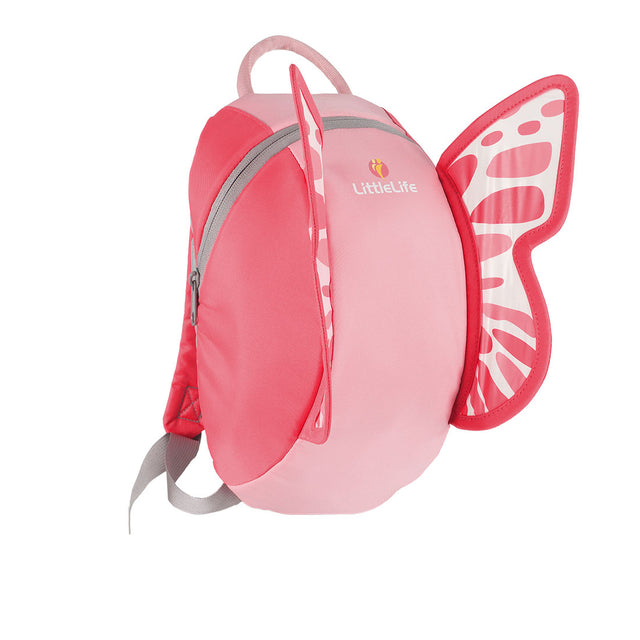
LittleLife Big Butterfly kids backpack, photographed by LittleLife

LittleLife Big Butterfly kids backpack

6L · Not stated as waterproof · £21.99 (£9.99 on sale)

Preschool days out where lunch and a jumper is the whole load.

Photo and specifications: LittleLife, checked 15 September 2026.

What is good

  • Light, cheap and frequently reduced.
  • Chest strap included.
  • Character design that appeals at three or four.
  • Big enough for lunch, a bottle and a jumper.

What is not

  • 6 litres is a lunch bag rather than a school bag.
  • Zipped top and no waterproof claim.
  • No published waterproof material or sealed seams.
  • Outgrown quickly once school folders appear.
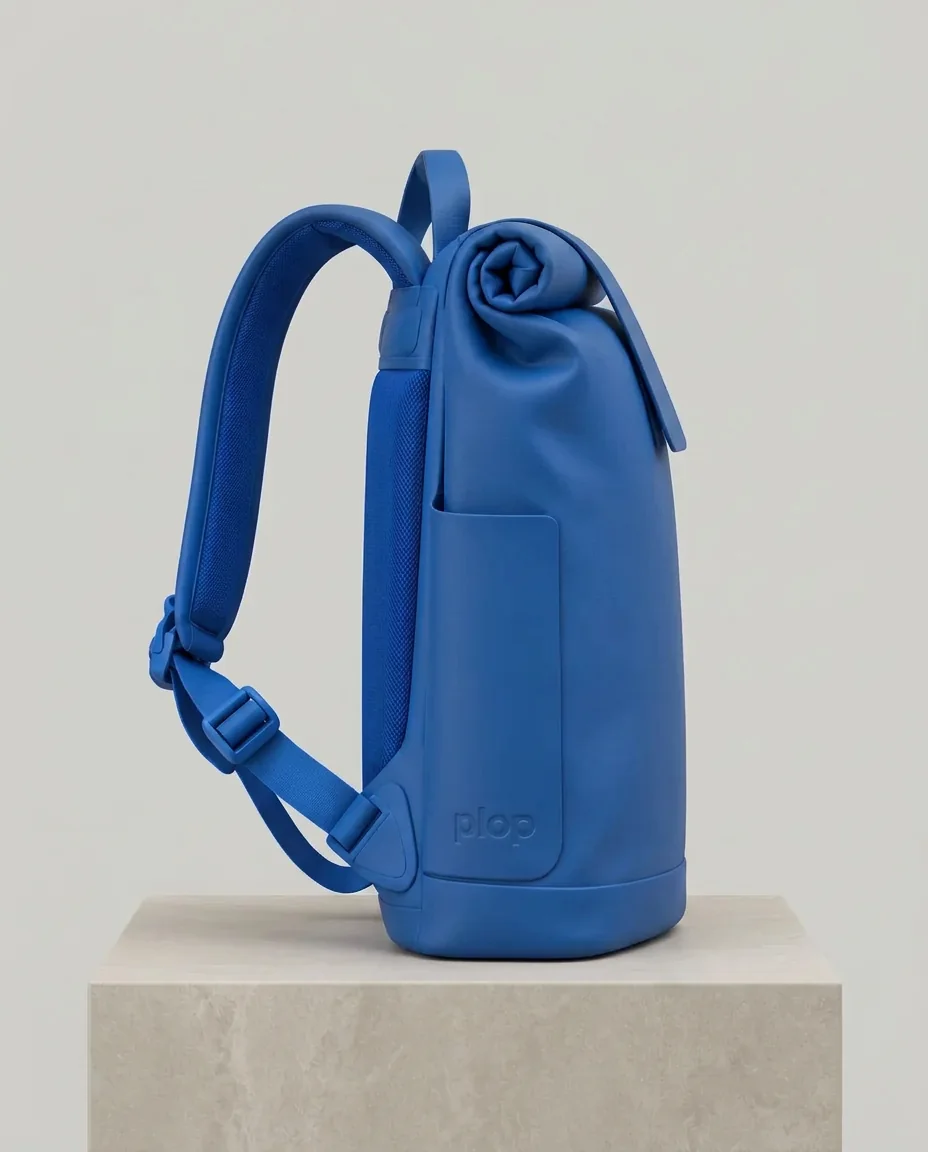
plop Roll Top waterproof kids backpack in Sea blue

plop Roll Top

10L · Fully waterproof, welded seams · £39

Primary school and nursery in British weather, where A4 has to fit and the bag has to stay dry inside.

What is good

  • A4 books sit flat at 32 cm high and 25 cm wide.
  • Roll top with no zip to leak at the opening.
  • Welded seams and a reinforced base rather than stitched panels.
  • Chest strap a three-year-old can clip alone.
  • Free UK shipping, 30-day returns, 2-year guarantee.

What is not

  • The most expensive bag in this comparison.
  • New brand, so no customer reviews yet.
  • One size and three colours only.
  • Too big for a child under three.
Fjällräven Kånken Mini backpack, photographed by Fjällräven

Fjällräven Kånken Mini

7L · Water resistant · £80

A recognisable everyday bag for preschool and short days out.

Photo and specifications: Fjällräven, checked 15 September 2026.

What is good

  • Long-standing design with a seat pad included.
  • Hard-wearing, quick-drying Vinylon F fabric.
  • Reflective logo and an internal address label.
  • Straps adjust from a small child to an adult.

What is not

  • At 29 cm tall, A4 will not sit flat.
  • Water resistant rather than waterproof, with a zipped opening.
  • The most expensive bag on this page, at £80.
  • No chest strap.
Sticky Lemon backpack large, photographed by Sticky Lemon

Sticky Lemon Backpack large

Not published · Waterproof lining, body not stated as waterproof · €69.95

Parents who want a design-led school bag and are happy with a zip.

Photo and specifications: Sticky Lemon, checked 15 September 2026.

What is good

  • Tall enough for A4 at 38 cm.
  • Recycled PET body and a waterproof inner lining.
  • Strong colour and print range, and a name tag inside.
  • Front pocket and an internal elastic bottle band.

What is not

  • Zipped opening, which is where rain gets in first.
  • No litre capacity published, so you are buying on dimensions.
  • The lining is described as waterproof, not the whole bag.
  • Priced in euros, so UK delivery and duties are on top.
  • For a child under three, plop is the wrong bag. It starts at age 3 and 10 litres is more than a toddler needs. A 2 litre pack, ideally with a parent rein, suits that age better, and the LittleLife Butterfly Toddler is the obvious choice in this table.
  • plop is a new brand, so there are no customer reviews yet, it comes in one size, and the first bags are still being made.
  • Trunki's PaddlePak is the best of these for swimming and the beach, but it is water resistant rather than waterproof and it is shaped for kit rather than folders.
  • Fjällräven's Kånken Mini and Sticky Lemon's large backpack are both zipped, which a two-year-old will struggle with, and both cost more than the bags aimed at that age.
  • Only plop publishes a fully waterproof construction here. Everything else is water resistant, lined, or makes no waterproof claim at all.

Every figure for another brand was read from that brand's own product page on 15 September 2026, and each photo is that brand's own, shown with a link back to the page it came from. Smiggle blocks automated reading of its product pages, and we do not publish figures we cannot read at source, so it is left out of the tables rather than guessed at.

Size by age, not by label

Under three, keep it tiny. Around 2 litres is enough for a snack, a beaker and a spare set of clothes, and it stays narrow enough not to unbalance a child who is still learning to run.

From about three, when nursery folders and lunch boxes appear, 10 litres becomes useful and still fits a small back at 32 cm high and 25 cm wide. Anything wider than their shoulders is too wide, whatever the litre figure says.

  • Ages 1 to 3: roughly 2 litres, light, ideally with a rein option.
  • Ages 3 to 5: roughly 10 litres, tall enough for A4, with a chest strap.
  • Ages 5 and up: 10 to 14 litres, once reading folders and PE kit arrive.
  • Weight matters: a toddler should carry no more than about a tenth of their own body weight.

A closure a toddler can work alone

Zips catch, jam and need two hands going in opposite directions. A roll top folds down two or three times and presses shut, which is why a three-year-old can close one without help.

Watch a child open a bag in a shop if you can. The one they can manage is the one that actually gets worn, rather than carried by a parent from the car to the door.

  • Roll top: fold, press, done, and it shrinks as the bag empties.
  • Zip: fastest for adults, most frustrating for small hands.
  • Drawcord: easy to open, easy to leave open, and rain gets straight in.

Straps, reins and staying on

A chest strap matters more at this age than any pocket. It stops the straps sliding off shoulders that have not broadened yet, which is the single most common reason a toddler takes a bag off after ten minutes.

Reins are a separate decision. A detachable rein is genuinely useful on a pavement with a runner, and it is a real point in the LittleLife toddler pack's favour. plop does not offer one.

  • Padded adjustable straps, so the same bag still fits next year.
  • A chest strap the child can clip themselves.
  • A rein if you have a bolter, and a bag that lets you remove it later.

Assume it will be filthy

Toddler bags meet mud, paint, yoghurt and puddles in their first week. A soft matte TPU fabric keeps all of it on the surface, so a damp cloth is enough. Woven and textured fabrics hold dirt in the weave and never quite recover.

No waterproof bag should go in the washing machine. Warm water, a drop of washing-up liquid, then air dry away from radiators, and it still looks new in year three.

What actually fails on a toddler's bag

It is almost never the fabric. It is the base, which is dragged along pavements, and the point where the strap joins the body, which takes the whole weight when a bag is swung by one strap. Zips come third, usually jamming on something a child pushed in sideways.

That is the case for welded seams, a reinforced base and a closure with no mechanism, rather than for a particular brand.

How we compared these bags

Every figure comes from the maker's own product page rather than a retailer listing or a review site, and where a maker publishes no figure the table says so. Photos are each brand's own image, linked back to the page the specifications came from.

Checked on 15 September 2026. Prices move with sales, so check before buying. We make one of these bags, so read the numbers rather than the adjectives.

Common questions

What size backpack does a 3 year old need?
Around 10 litres, roughly 32 cm high by 25 cm wide, is a good fit from age three. It takes a lunch box, spare clothes, a bottle and a nursery folder without being wider than the child.
What size backpack does a 2 year old need?
About 2 litres, around 23 cm high. That holds a snack, a beaker and a change of clothes, which is all a two-year-old should be carrying.
Should a toddler backpack be waterproof?
It helps more than it does for an older child, because toddler bags spend their time on wet grass and cloakroom floors. A waterproof fabric with sealed seams also means a spilled drink stays inside the bag.
How much weight can a toddler carry in a backpack?
As a rule of thumb, no more than about a tenth of their body weight, which is why a 2 litre bag is right under three and why an oversized bag gets abandoned.
Backpack or rucksack for a toddler?
They are the same thing. What matters is the capacity, the closure the child can manage, and whether it wipes clean.
Do toddler backpacks with reins work?
Yes, for a child who runs, and the useful ones let you detach the rein later so the bag outlives that phase. The LittleLife Butterfly Toddler includes one; plop does not.

Keep reading